Grumman F9F Panther · Naval Air Station Minneapolis · the 1950s
The Panther and the Weekend Warriors of Wold-Chamberlain Field
Grumman's first jet fighter flew the Navy's first jet combat missions of the Korean War and, a few years later, sat on the reserve ramp beside the Minneapolis–St Paul airport. This archive follows the F9F from Bethpage to Task Force 77 to the museums that keep it today — starting with the Minnesota station that flew it on weekends.
Before the field · 1915–1928
A two-mile concrete speedway, then an airfield in its infield
The ground the Navy landed on in 1928 had been famous once, briefly, for something else. In 1914–15 a group of Indianapolis Motor Speedway men — Frank H. Wheeler, whose carburetor company had helped build the Indianapolis track, and Carl G. Fisher — with Twin Cities backers led by Dr. Charles E. Dutton and general manager James F. Sperry, bought 342.5 acres of farmland just west of Fort Snelling, south of the Minneapolis city limits where Highway 62 now runs, and built the Twin City Motor Speedway[13, 15]. Fifteen hundred men and their horses moved 300,000 cubic yards of earth in the spring of 1915; the contractors laid a two-mile concrete oval, six inches thick, in a "record breaking" 35 days, finishing on 26 August; the wooden grandstands were built to hold 100,000[13, 14]. The cost was put at $800,000 to $900,000[14, 15].
The opening race, a 500-miler on 4 September 1915, Labor Day weekend, was meant to rival Indianapolis. Earl Cooper won it in a Stutz at 86.34 mph and took the $20,000 first prize; the crowd was 25,000 to 28,000 where a hundred thousand had been hoped for, and the track "heralded as the fastest and safest track in the world, was in fact extremely rough"[13, 15, 14]. The first Minnesota winter heaved the concrete and broke it up[13]. A 150-mile race on 4 July 1916 — Ralph De Palma, Mercedes, 91.074 mph — took in $6,886 at the gate; within two days the drivers, owed $8,114, had forced the company into bankruptcy, and it went into foreclosure that August more than $300,000 in debt[15, 14, 13]. An American Red Cross auto derby in July 1917 was the last event[17]. That summer the grandstands were sold to pay creditors, weeds came up through the cracked track, a receiver rented part of the grounds to a hog farmer — and the site was already being talked of "as a possible site for an airfield or training ground for the navy aviation corps"[13, 14].
Aviation is what saved it. Congress set up an air-mail route from the Twin Cities to Chicago in April 1920; the Twin City Aero Corporation acquired the property and put up a large wooden hangar that August, and the infield became Speedway Field[17, 13]. The mail route was suspended in June 1921 after it had lost four pilots and eight aircraft, but the same year the state paid $45,000 for three hangars along the north edge of the field for the Minnesota National Guard's 109th Observation Squadron — the hangars the Naval Reserve inherited in 1931[17]. On 10 July 1923 the field was dedicated as Wold-Chamberlain Field, for Ernest G. Wold and Cyrus Chamberlain, Minneapolis aviators killed in aerial combat in the First World War[17, 13]. In 1928 the Minneapolis Park Board — the one city agency that could own land outside the city limits, under enabling legislation passed in 1927 — bought the field for $165,000, the old concrete oval was broken up and buried so the airfield could grow, and on 1 October the Navy's reserve base opened on the same ground[14, 17, 16, 13, 1]. In the 1928 aerial at right the oval is still there: the curve of trees and road around the hangars is the speedway.


Part 1
The station at Wold-Chamberlain Field
The Navy came to Minneapolis in 1928. That year the Minneapolis Park Board bought Wold-Chamberlain Field for $165,000, and the 9th Naval District announced plans for an air squadron there[16]. Local businessmen put up a hangar at the north end of the field "to shelter the newly established Naval Reserve Aviation Base"[17]. The Navy's own squadron dictionary gives the date: Naval Reserve Aviation Base Minneapolis was established on 1 October 1928 and was redesignated Naval Air Station Minneapolis on 1 January 1943[1]. When the Minnesota National Guard's 109th Observation Squadron moved to St. Paul in 1931, the Naval Reserve took over its 1921 hangars[17].
During the Second World War the station was a primary flight-training base for naval aviation cadets, flying N2S Stearman trainers, with an outlying field — NAAF Fleming Field in South St. Paul, the "B Base" — established on 20 July 1943[1, 2]. Its twice-monthly newsletter, Penguinews, carried a penguin-on-skis insignia designed by Walt Disney Studios in 1941[2]. Among the cadets who soloed there in the winter of 1942–43 was an 18-year-old George H. W. Bush[57]. Fleming Field took its name from Capt. Richard E. Fleming, USMCR, the St. Paul-born Marine aviator awarded the Medal of Honor at Midway[58].
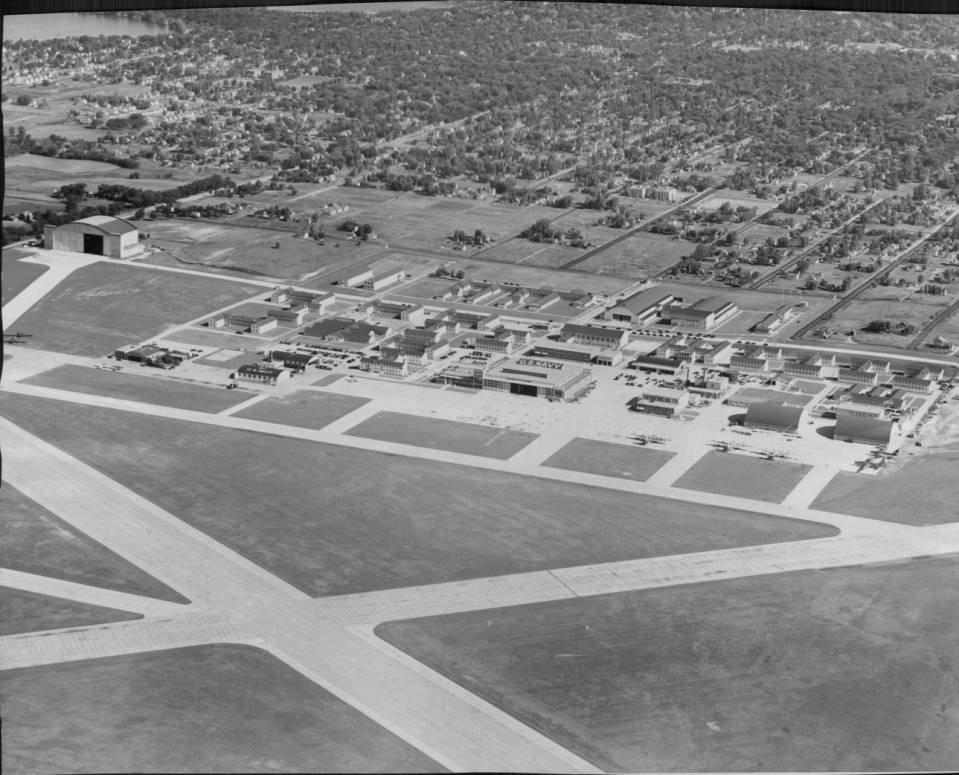
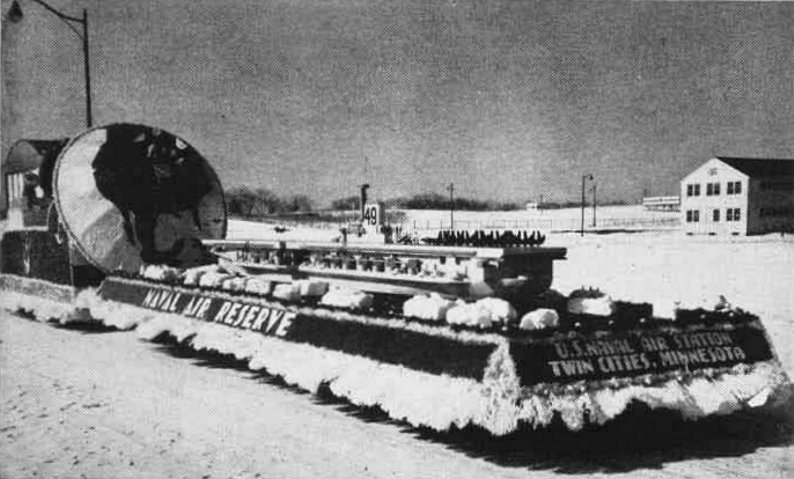
The war's end put the station into maintenance status on 1 October 1945. On 19 June 1946 it was "placed back in operational status for the reserves"[1]. Two aerial photographs taken that February — one by the Navy, one by the Minneapolis Daily Times — show the station as it reopened, and the newspaper's caption gave the mission: "The station will be a full time training base for reserve Navy and Marine fliers"[18, 19]. In 1947 military flights still made up almost half of all aircraft operations at Wold-Chamberlain[16]. From 1 July 1946 every Naval Air Reserve station in the country, Minneapolis included, answered to the Naval Air Reserve Training Command at NAS Glenview, Illinois[1]. The Navy and the airport had been arguing over the field since before the war — in April 1941 the base commander complained that civilian student pilots were "interfering seriously with the training of naval reserve flyers", and in October 1947 Rear Adm. Irving McQuiston, "advisor to the naval air reserve", was testifying before the Metropolitan Airports Commission[28, 29].
That is the mission the F9F Panther arrived into: not a fleet squadron working up for a carrier cruise, but a reserve training station whose pilots flew on weekends and held civilian jobs the rest of the week — the "Weekend Warriors" of the postwar Navy and Marine Corps.



Part 2
Squadrons at NAS Minneapolis in the 1950s
The Navy's own organisation listings settle which squadrons drilled at Minneapolis. The Naval Aeronautical Organization for Fiscal Year 1953, dated 1 October 1952, gives the station's mission — "Provide facilities to support the Naval and Marine Air Reserve Training Program, and USN Flight Proficiency for naval aviators in the Minneapolis area" — and lists its organized reserve squadrons: FASRON 811, 812, 815, 816; VA-811, 812, 813, 814; VF-811, 812, 813, 814; VMF-213, 234; MGCIS-16; VP-811, 812; VR-811, 812; HU-811; VS-811, 812; AWS-81[30]. The February 1955 edition repeats the list, adds the station's satellite fields (the municipal airports at Fargo, Bemidji and Duluth) and notes that Wold-Chamberlain was formally a Navy–USAF joint-use field[31]. So the 81x block was the whole Minneapolis establishment — four Navy fighter squadrons, four attack squadrons, two patrol, two anti-submarine, two transport, a helicopter unit and four fleet aircraft service squadrons — with the two Marine Air Reserve fighter squadrons, VMF-213 and VMF-234, beside them[8, 7, 6].
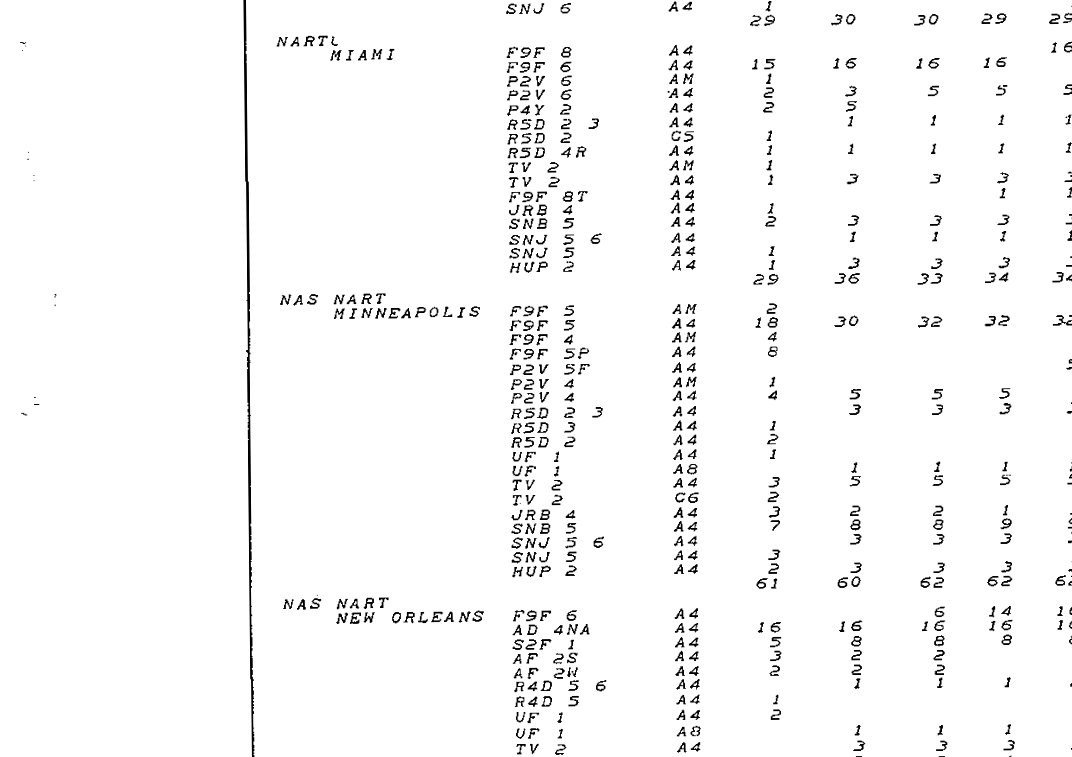
What the aircraft were is answered for 1957 by the Navy's Allowances and Location of Navy Aircraft: on 28 February 1957 the station's Naval Air Reserve Training Unit held 61 aircraft, 32 of them Panthers — 20 F9F-5, 4 F9F-4 and 8 F9F-5P photo-Panthers — plus five TV-2 jet trainers, five P2V Neptunes, three R5D transports, two HUP-2 helicopters and SNB, SNJ and JRB trainers, with 30–32 F9F-5s planned for every quarter of the year[32]. By 31 December 1957 the F9F-4s were gone, the count stood at 28 F9F-5 and 5 F9F-5P, and seven S2F-1 Trackers had arrived for the anti-submarine squadrons[33]. Which of the four VF squadrons flew which Panthers is not stated — the reserve training unit pooled the aircraft.
What could not be confirmed: the month the first jet arrived (the record only bounds it — a jet was on the field by 12 July 1951); the aircraft on hand between 1952 and September 1956 (the Navy's monthly aircraft tables begin only with September 1956, when the station held 58); and the station's commanding officers after 1950. Rather than invent them, this page prints the gaps as gaps. The station's own journals for 1956–70 survive at the National Archives at Kansas City and would settle the commanders[44].
Read the row status
Confirmed two independent sources, or the Navy's own squadron dictionary.
Partial one source, or the years/aircraft are not all confirmed.
Not found searched for and not found — printed so nobody has to search again.
| Unit | Service | Years at the station | Aircraft | What the record says | Status |
|---|---|---|---|---|---|
| VMF-234 | Marine Air Reserve | 1947 – 1970 (as VMF, VMA, VMR) | F9F Panther Feb 1955 – May 1958; then AD-5 Skyraider; C-119F from 1962 | Reactivated 1 July 1947 at San Diego and moved to Minneapolis. Its people were called up for Korea in March 1951 — by 23 April "all that remained of VMF-234 at Minneapolis was a mailing address". Re-formed October 1952; a fighter squadron on Panthers from February 1955; became VMA-234 with Skyraiders in May 1958 and VMR-234 with Boxcars in January 1962; moved to Glenview when the station closed in 1970.[8, 7] | Confirmed |
| VMF-213 | Marine Air Reserve | at Minneapolis by 1956; dates otherwise not found | F9F-4 Panther | Reactivated in the Marine Corps Reserve at Minneapolis and flying the F9F-4; one of its aircraft was lost in the 9 June 1956 crash on 46th Avenue South. Contemporary coverage described the jet as belonging to "Marine reserve squadrons VMF-213 and VMF-234", which suggests the two squadrons pooled aircraft.[6, 10] | Partial |
| VP-911 → VP-ML-61 → VP-812 | Naval Air Reserve | 6 Jul 1946 – 20 Jul 1950 | PV-2 Harpoon, PBY-5A/6A Catalina; P2V Neptune after mobilisation | Established at NAS Minneapolis as a reserve patrol squadron with a nine-aircraft allowance. Called to active duty on 20 July 1950 with 13 other reserve squadrons; moved to Whidbey Island, flew Neptunes from Kodiak and, from September 1952, Atsugi — "over 500 combat missions" off Korea. Later VP-29. The only Minneapolis Navy squadron mobilised as a unit for Korea; it never flew Panthers.[5, 1] | Confirmed |
| VF-811, VF-812, VF-813, VF-814 | Naval Air Reserve | on the station's books 1 Oct 1952 and 1 Feb 1955 (both OPNAV listings); VF-813 dated 1952 by a Banshee loss | F2H-1 Banshee (VF-813, 1952); the station pool held 32 Panthers on 28 Feb 1957 (20 F9F-5, 4 F9F-4, 8 F9F-5P) and 33 on 31 Dec 1957 (28 F9F-5, 5 F9F-5P) | The four Navy reserve fighter squadrons named in the Naval Aeronautical Organization for FY1953 and FY1955. VF-813 lost F2H-1 BuNo 122537 "near Stacy, MN due to mechanical failure" on 26 April 1952. Aircraft were owned by the station's training unit and pooled, so the 1957 Panther count is the station's, not one squadron's.[30, 31, 41, 32, 33] | Confirmed |
| VA-811, VA-812, VA-813, VA-814 (later with FAS-812) | Naval Air Reserve | listed 1 Oct 1952 and 1 Feb 1955; VA-811 and VA-813 still there in 1963 | 1950s types not stated by squadron (the pool held Panthers and, from 1957, S2F Trackers); A-1E Skyraider → A-4B Skyhawk (first acceptance flight 30 Aug 1963) | Four attack squadrons in the OPNAV listings; two of them survived into the Skyhawk era, drilling on alternating weekends and sharing about 15 A-4Bs and three T-1A Seastars.[30, 31, 3, 4] | Confirmed |
| VP-811, VP-812 · VS-811, VS-812 · VR-811, VR-812 · HU-811 · FASRON 811, 812, 815, 816 · AWS-81 · MGCIS/MACS-16 | Naval Air Reserve / Marine Air Reserve | listed 1 Oct 1952 and 1 Feb 1955 | P2V-4/-5F Neptune (5 in 1957); S2F-1 Tracker from 1957; R5D Skymaster; HUP-2 helicopters; UF-1 Albatross | The rest of the Minneapolis establishment in the OPNAV listings — patrol, anti-submarine, transport and helicopter squadrons, four fleet aircraft service squadrons, an aviation weather unit and a Marine ground-control-intercept squadron. The 1957 aircraft tables show their types.[30, 31, 32, 33] | Confirmed |
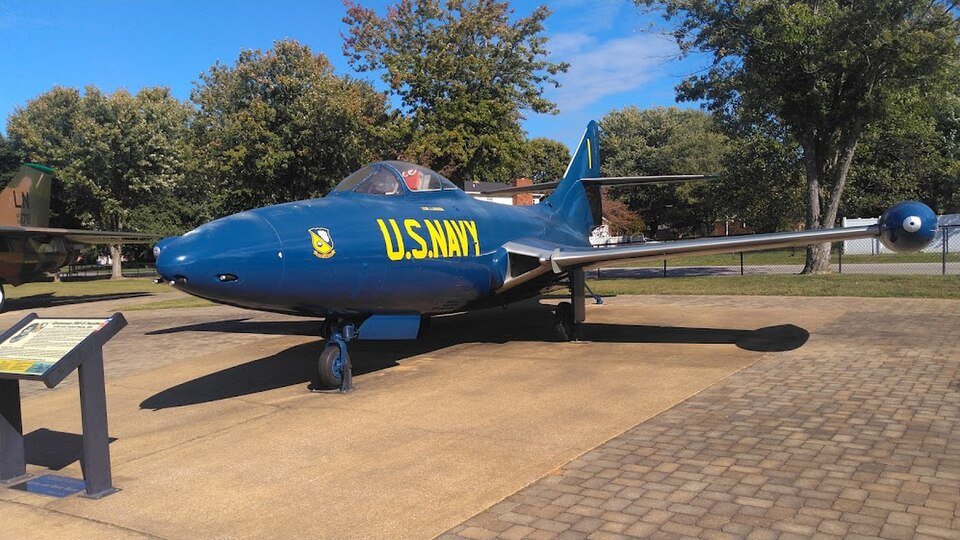
| Naval Reserve unit (unnamed) | Naval Air Reserve | 28 Feb 1958 – 31 May 1959 | F9F-5 Panther BuNo 125992 | The Bureau of Aeronautics history card for 125992 places it with the Naval Reserve at NAS Minneapolis for fifteen months before it was stricken on 27 July 1959. It is the one Panther that can be tied to the station by serial number — and it survives, in Blue Angels colours, at Bowling Green, Kentucky.[60] | Confirmed |
| NARTU Minneapolis (Naval Air Reserve Training Unit — "NAS NART Minneapolis" in the aircraft tables) | Naval Air Reserve | 1951 – 1970 (jets from 1951 at the latest) | FH-1 Phantom (1951–52); F9F-4 Panther (1955); 61 aircraft on 28 Feb 1957 and 66 on 31 Dec 1957, types as listed above | The station-level unit that owned the Navy reserve aircraft until the 1970 reorganisation. FH-1 Phantom BuNo 111760 was written off after a belly landing at "NRAS Minneapolis" on 12 July 1951 and BuNo 111808 was on strength in 1952 wearing the station's "E" tail code (E-104); F9F-4 BuNo 125220 is listed with "NARTU Minneapolis" in 1955; the 1957 OPNAV tables give the whole inventory.[40, 43, 42, 32, 33, 49] | Confirmed |
| Aircraft on hand 1952–56 | Naval Air Reserve | 30 Sep 1956 (earliest table online) | 58 aircraft on the station (types not legible in the 1956 scan) | The Navy's monthly aircraft-location series begins with September 1956, so no 1952–55 tables exist online; the first report puts 58 aircraft under NAS NART Minneapolis (61 in Feb 1957, 66 in Dec 1957). The 1956 report's type breakdown could not be read from the scan. The reserve Panther squadrons that went to Korea (VF-721, VF-781, VF-831, VF-837, VF-821) came from Glenview, Los Alamitos and other reserve stations, not Minneapolis.[34, 32, 33] | Partial |





Part 3
The Panther years at Minneapolis — what is dated
- Before the Navy: the Twin City Motor Speedway opens on the farmland west of Fort Snelling — a two-mile concrete oval, a 500-mile race won by Earl Cooper in a Stutz, a crowd of 25,000–28,000 where 100,000 had been hoped for. Bankrupt after its second race on 4 July 1916; last event July 1917.[13, 15, 17]
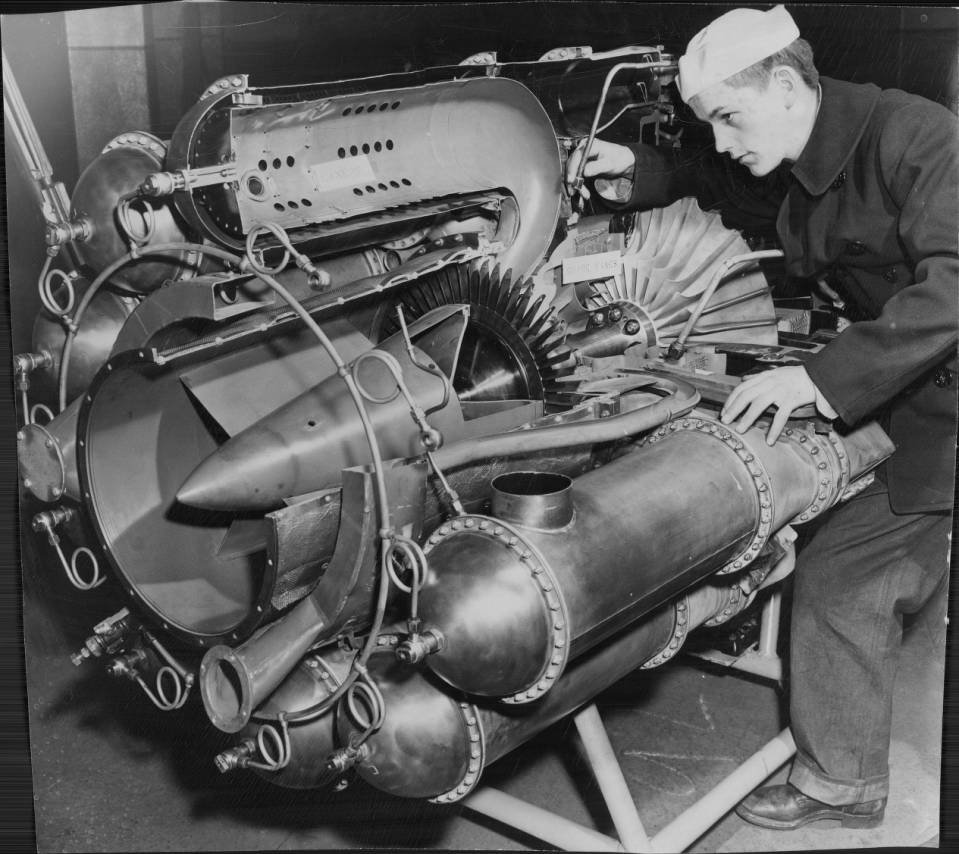
- Piston types on the ramp: F4F Wildcat, F6F Hellcat, F8F Bearcat, F4U Corsair, TBM Avenger, AD Skyraider, SNJ and SNB trainers (an undated veterans' list). A Minneapolis newspaper photographed a cutaway jet engine on display at the station on 17 April 1948 — jet ground school before jet aircraft.[3, 4, 26]
- The first dated jet at the station: McDonnell FH-1 Phantom BuNo 111760, a former test-centre and VMF-122 aircraft, is written off after a belly landing at "NRAS Minneapolis". A second Phantom, BuNo 111808, is on the Naval Air Reserve's strength at Minneapolis in 1952 wearing the station's "E" tail code (E-104). When the first jet arrived was not found.[40, 43]
- VMF-234 re-forms as a fighter squadron on the F9F Panther — the earliest dated Panther operation at the station. The same month the Navy's FY1955 organisation listing repeats the station's squadrons, names its satellite fields (Fargo, Bemidji and Duluth municipal airports) and calls Wold-Chamberlain "a Navy-USAF Joint Use Field"; the same year an F9F-4, BuNo 125220, is recorded with the Navy's NARTU Minneapolis. Navy jets had been on the field since at least 1951 (FH-1 Phantoms, then VF-813's Banshees).[8, 7, 31, 42, 40]
- 58 aircraft on the station in the first monthly aircraft-location report the Navy has put online — the earliest count of the Minneapolis ramp available.[34]
- Minneapolis's reserve transport squadron VR-811, "selected as tops in the Air Reserve in the western half of the U.S." with Olathe's VP-881, returns from two weeks of operations under Fleet command at Barbers Point, Hawaii — the station's only appearance in Naval Aviation News's chronology of 1955.[39]
- NAS Twin Cities is disestablished and becomes a Naval Air Reserve Detachment under Glenview; the Marines' VMR-234 moves to Glenview; the 934th moves to the north side of the airport in June — into, its own history says, "the vacated space". On 1 November Twin Cities' patrol reservists are merged into VP-60 at Glenview.[1, 8, 54, 51, 50]


Part 4
Weekend Warriors in the jet: how the Naval Air Reserve fought Korea in Panthers
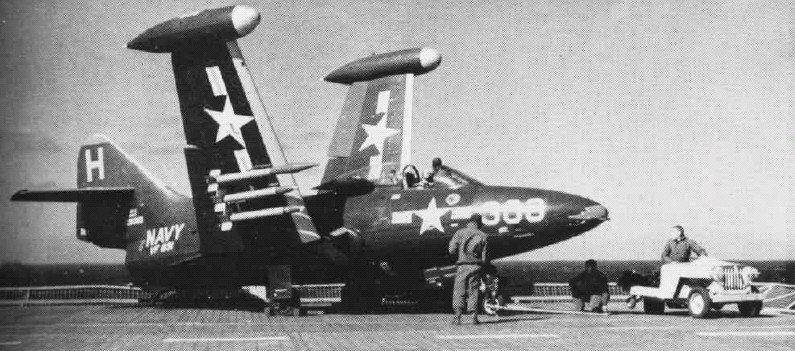
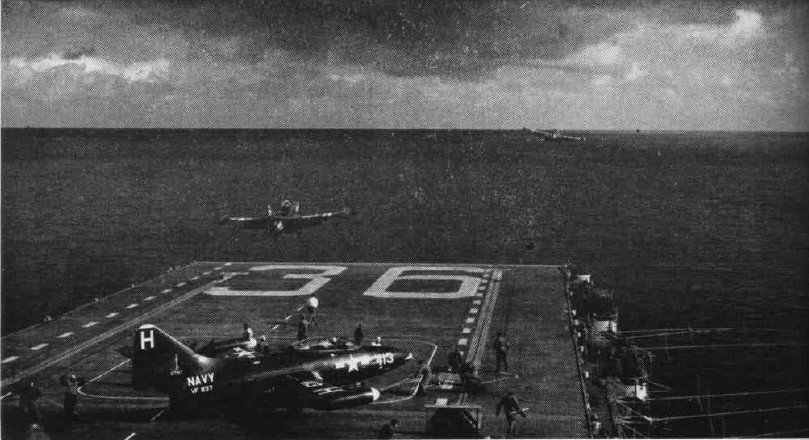
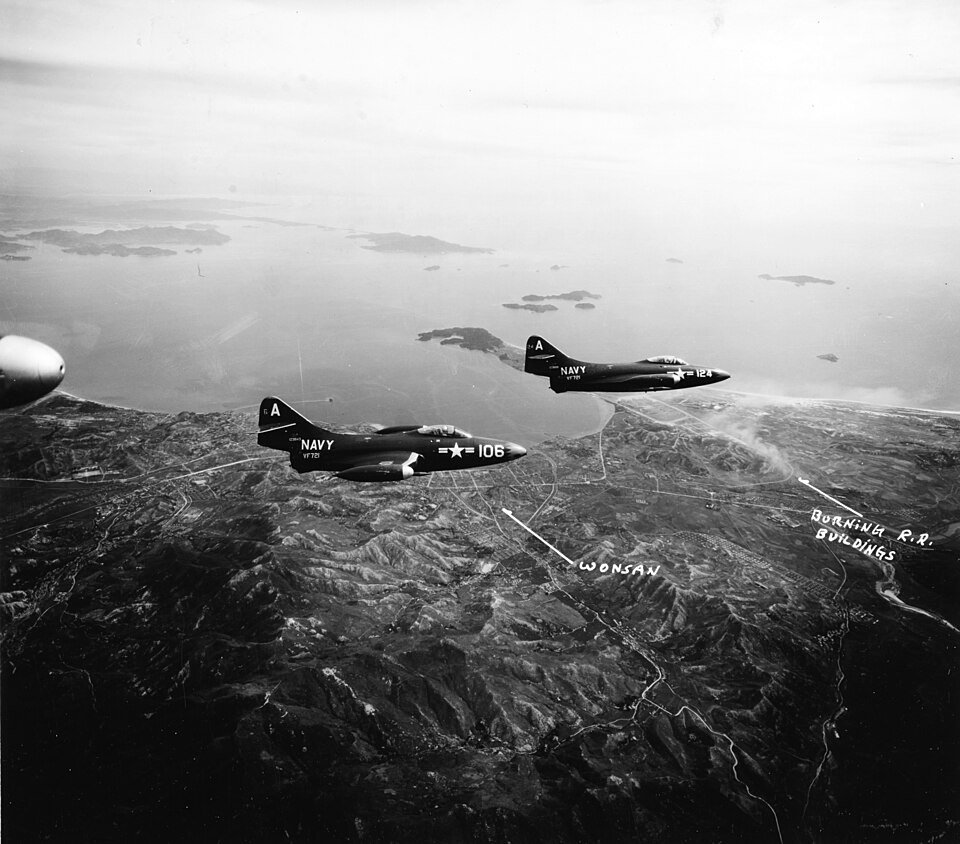
Minneapolis reported to NAS Glenview, and Glenview's own fighter squadron is the best picture we have of what a 1950s reserve Panther squadron did when the call came. VF-721, recalled from Glenview and embarked in USS Boxer (CV-21) with Carrier Air Group 101, began operations off Korea on 29 March 1951 — its pilots were "the first Naval Reserve pilots to launch strikes in Korea"[63]. A Navy caption for a 6 June 1951 strike photo over Wonsan names the two pilots, Lt(jg) Ray H. Anthony and Lt(jg) Herbert G. Pickartz, and adds that "both pilots were former 'Weekend Warriors' (reservists) from Naval Air Station Glenview"[62].
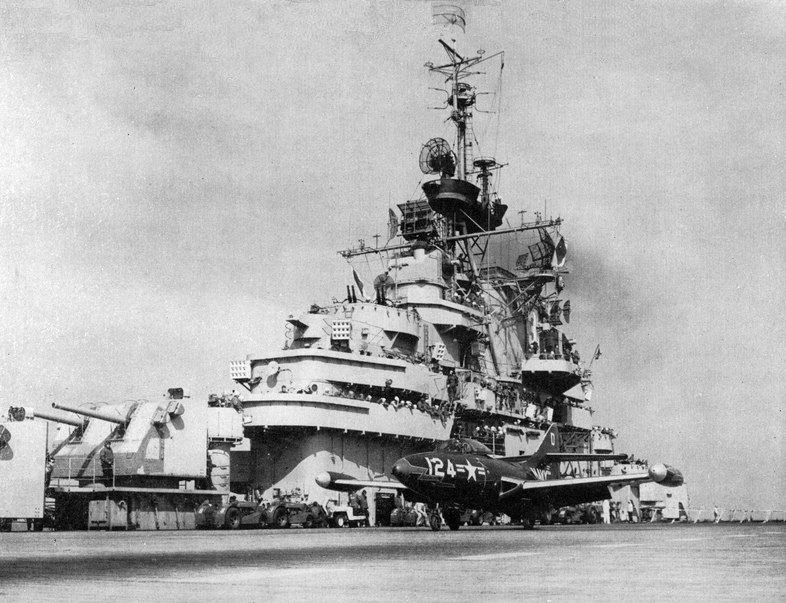
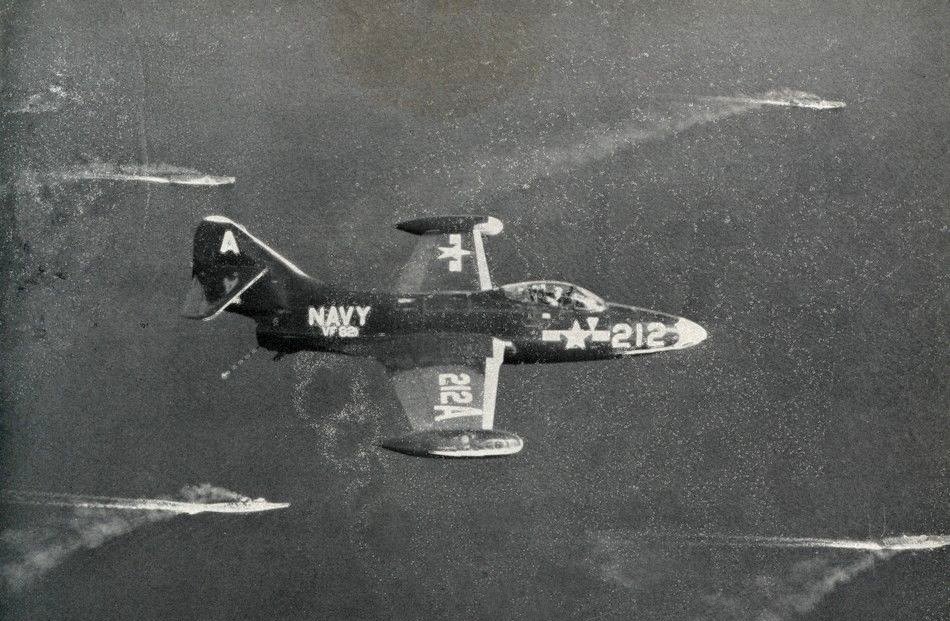
Other reserve Panther squadrons followed: VF-781 "Pacemakers" from Los Alamitos aboard Bon Homme Richard in 1951 and Oriskany in 1952–53 (where Lt Royce Williams fought seven MiG-15s — see Combat & Awards); VF-831 and VF-837 with CVG-15 aboard Antietam in 1951–52; VF-821 "Kingpins" aboard Essex in 1952–53. For a Minneapolis Marine reservist the path was different: VMF-234's people were recalled individually in March 1951 and fed into active squadrons, which is why the squadron itself was reduced to "a mailing address"[8].
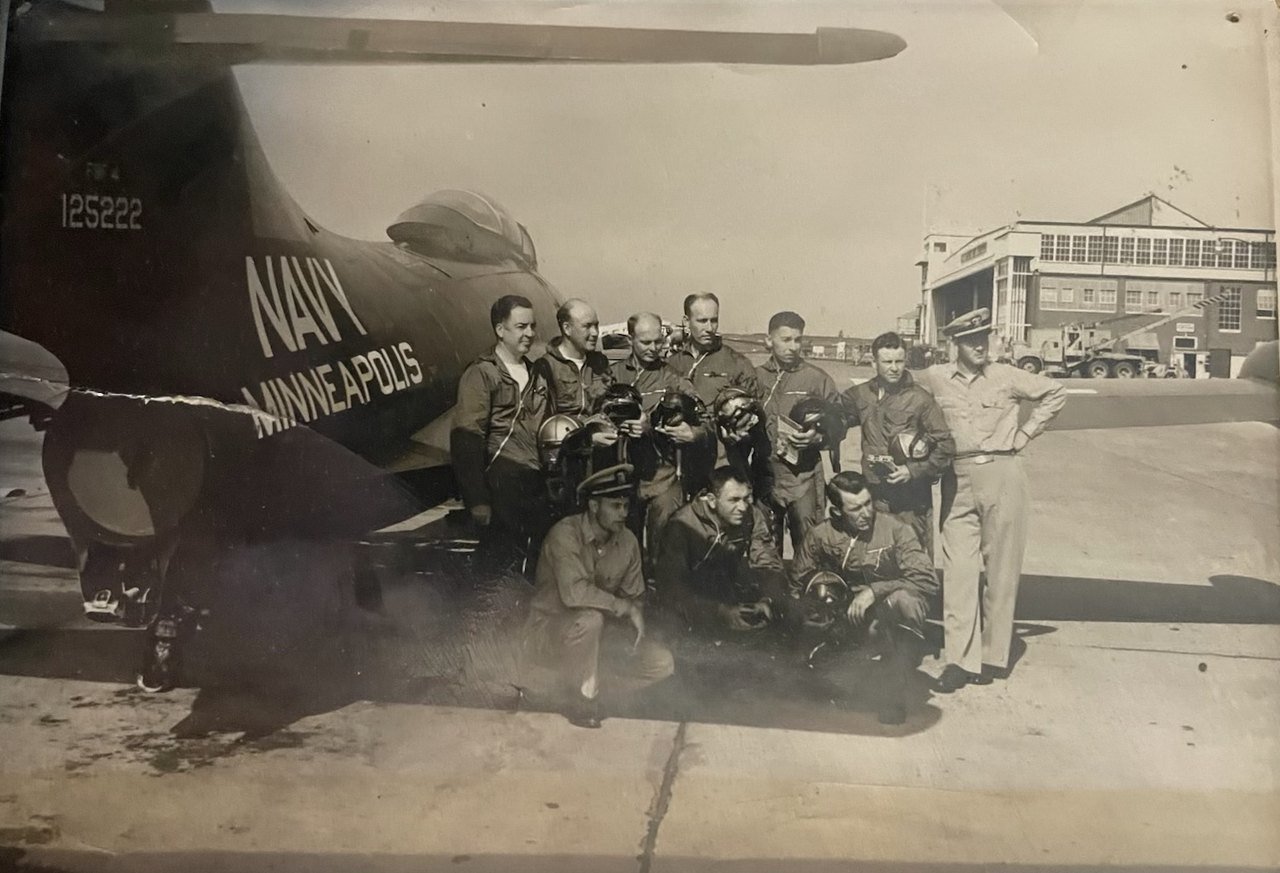
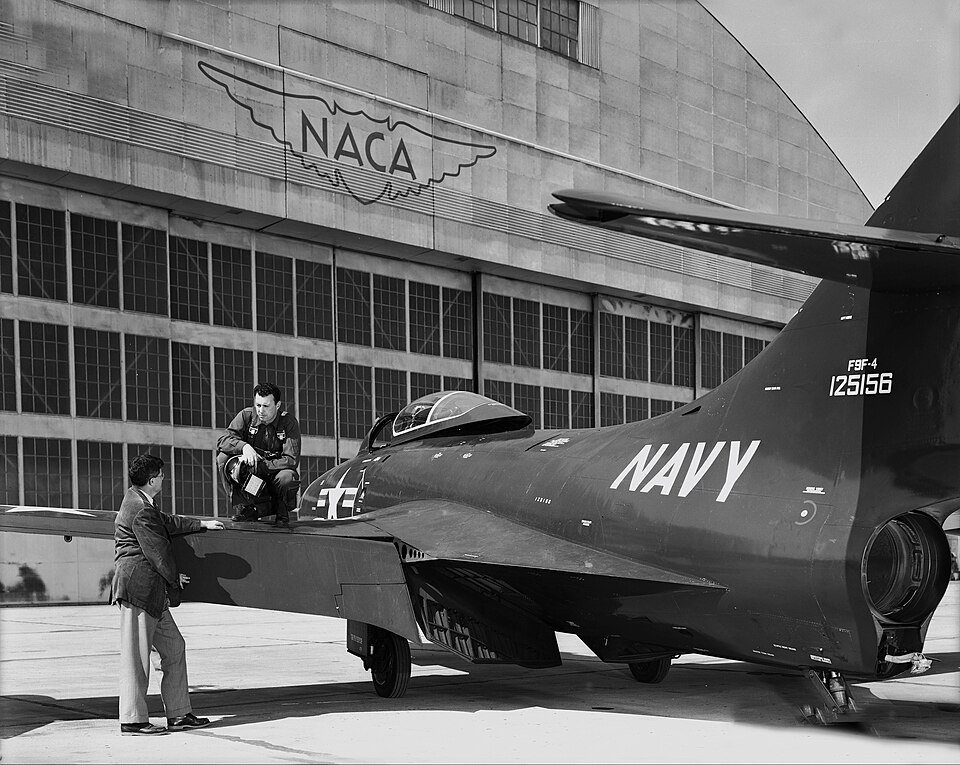
One photograph on this site shows a Panther on the Minneapolis ramp itself — the one at the top of the page: F9F-4 Bureau Number 125222, lettered NAVY MINNEAPOLIS, with reserve pilots in flight gear and two officers lined up in front of the station hangar, an original print from a private collection. The F9F-4 was a rare mark — only 109 were built — and the Navy's aircraft tables put four of them at the station on 28 February 1957 and none by the end of that year, which dates the picture to about 1955–57; the men are not yet identified[59, 32, 33]. The other combat photographs on this page are of the reservists' aircraft elsewhere. Hennepin County Library's Minneapolis newspaper collection holds the two 1946 aerials, the 1947 change-of-command and the 1948 jet-engine photographs shown on this page — under the library's condition that they be credited to it — but the collection ends before the jets arrived; the Minneapolis Star's 1956 crash photograph is linked in the sources rather than shown[18, 26, 9].



Part 5
How a reserve squadron trained — and what the jet changed
Command. From 1 July 1946 the Naval Air Reserve Training Command ran the reserve stations from NAS Glenview[1]. Minneapolis's Marine units later reported to the Marine Air Reserve Training Detachment at Glenview as well[8].
The drill rhythm. The best-documented account from the station comes from its Skyhawk years: VA-811 and VA-813 drilled on alternating weekends (the 1st and 3rd), shared one pool of aircraft, and sent pilots for two weeks' active duty for training at NAS Kingsville or NAS Beeville, Texas, with three T-1A Seastar jet trainers on hand for qualification. The station's radio call sign was "Employ" — "Employ six" on the air[4]. No source gives the same detail for the Panther years of 1955–59, so treat this as the later practice of the same station, not a Panther-era record — though the Navy's 1957 aircraft tables show what the pool held: 32–33 Panthers, five TV-2 jet trainers for instrument and transition work, and the SNB and SNJ trainers for proficiency, shared by four fighter and four attack squadrons drilling in rotation[32, 33, 31]. The two weeks of annual duty could go a long way: in August 1955 the station's transport squadron VR-811, "selected as tops in the Air Reserve in the western half of the U.S." together with Olathe's VP-881, spent them under Fleet command at Barbers Point, Hawaii, returning on 14 August[39].
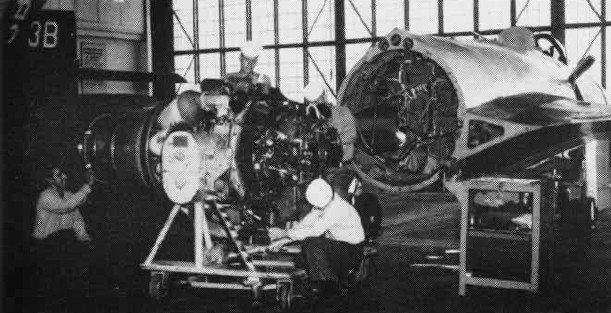
What a jet demanded. A 1952 Proceedings account of a reserve attack squadron in Dallas describes the pattern the whole Naval Air Reserve ran on: weekend flying built around a small active-duty cadre, with the squadron expected to be ready for mobilisation on 48 hours' notice[61]. A Panther squadron added jet fuel, ground school on the turbojet and the ejection seat, longer runways — Wold-Chamberlain's south runway reached 10,000 feet by the end of 1961 — and an aircraft whose 20 mm cannon and rocket rails made a gunnery range a necessity[16]. Carrier qualification periods for Minneapolis reservists, and the gunnery ranges they used, were searched for and not found. Minneapolis had been learning the turbojet since the late 1940s, though: the station showed off a cutaway jet engine in April 1948 and flew FH-1 Phantoms — the Navy's first carrier jet, handed down to the reserves — by 1951[26, 40].



Part 6
Commanders and notable local figures
Station commanding officers
Whaley, Briggs, Fickling — then a gap
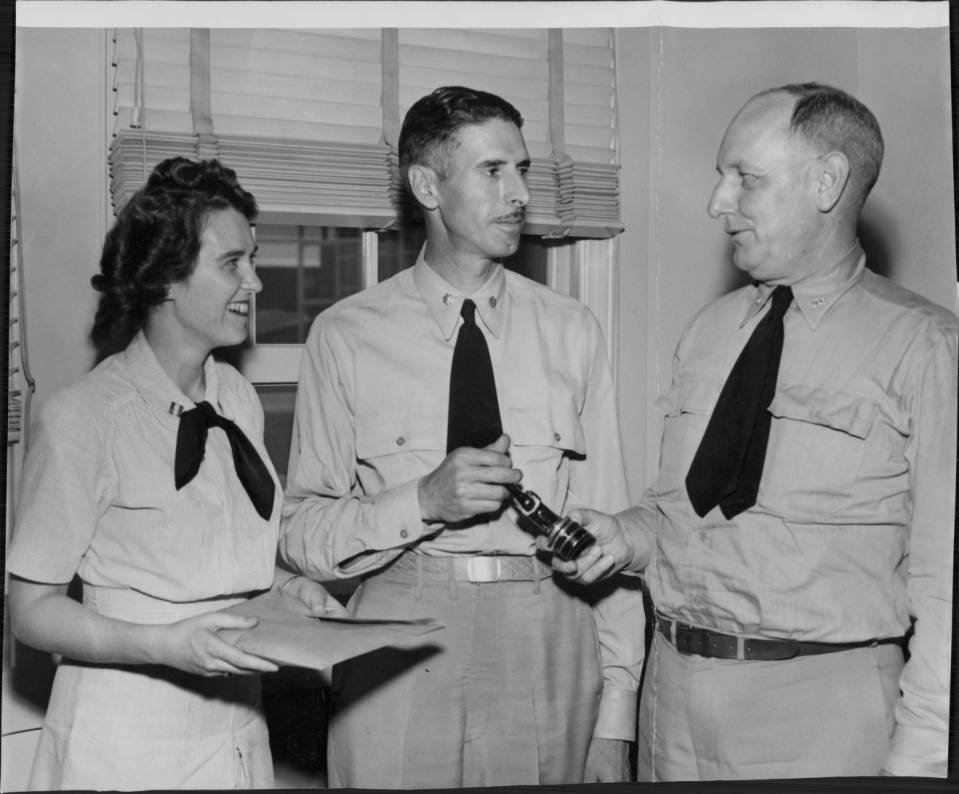
Capt. William B. Whaley commanded the reopened station from at least October 1946 until 11 July 1947, when Capt. Raymond A. Briggs "takes over the command of the naval air station at Wold-Chamberlain field"[20, 21, 22]. A February 1947 caption calls Cdr. Laurence D. Ruch "head of the Naval Air Station" — probably the executive officer or an acting CO[23]. Capt. Evan E. Fickling, fresh from commanding the Naval Air Facility at Naha, Okinawa, "returned to the United States to command of the Naval Air Station, Minneapolis" in 1949 and left for USS Rendova on 20 December 1950[25, 24]. The commanding officers from 1951 to the 1970 disestablishment were not found; the station's own journals for 1956–70 survive at the National Archives at Kansas City[44].
Marine Air Reserve Training Detachment
Lt. Col. J. Fleps, USMC
Named in October 1946 as "commandant of the Marine air detachment" when he and Capt. Whaley welcomed Gen. Vandegrift at the field; that June he had flown open-house visitors in his own aircraft[20, 27]. His successors in the Panther years were not found.
Squadron commanders
Lyle Lundeen & George Kline
Cdr/Lt Cdr Lyle Lundeen commanded VA-811 from the "1950s" to 1963; Lt Cdr George Kline led VA-813 in 1963[4]. A veterans' account recalls that in the 1950s "the base Commanding Officer, Executive Officer and Training Officer would decide who would be the next Commanding Officer and Executive Officer" of the reserve squadrons[3].
9 June 1956
Maj. George Armstrong, USMCR
Aged 33, of Edina; killed when his F9F-4 crashed into homes on 46th Avenue South while trying to reach the field. Five residents also died[9, 10].
30 May 1957
Cmdr. Newell Olson & Lt. John Forsmark
Olson (38) was killed and Forsmark (26, of Minneapolis) survived the Memorial Day collision over a northeast Minneapolis cemetery service[12].
Winter 1942–43
Cadet George H. W. Bush
The future president did his primary flight training at the Wold-Chamberlain naval field, soloing that winter[57].
A name on the map
Capt. Richard E. Fleming, USMCR
St. Paul-born Medal of Honor recipient (Midway, 1942). The station's wartime "B Base" — today's South St. Paul airport — carries his name[58].
Often assumed, not so
Deke Slayton
The future astronaut, a University of Minnesota graduate, was recalled in 1951 with the Minnesota Air National Guard — an Air Force unit on the same airfield, not the Navy station[56].
Medal of Honor / Navy Cross
None traced to the 1950s station
No recipient who served at NAS Minneapolis after the war was found. The Panther's decorated pilots are on the Combat & Awards page.
Part 7
A jet-age field, a growing airport, and the end of the station
The Navy never had Wold-Chamberlain to itself. The airport took the name Minneapolis–St. Paul International Airport/Wold-Chamberlain Field in 1948; the Minnesota Air National Guard's 109th Fighter Squadron was federally recognised there in 1947; and the civil side grew through the 1950s until the first scheduled jet airliner, a Northwest DC-8, arrived on 5 January 1961 and a new terminal opened on 13 January 1962[16]. The south runway had been lengthened to 10,000 feet by the end of 1961 — long enough for anything the reserves flew[16]. The Historic American Buildings Survey later described the old military complex "west of 34th Avenue, now occupied by the Naval Air Reserve and the Marine Corps Reserve"[17].
Jets over a city carried a cost. In eleven days of June 1956 the field lost an Air Force F-89 and a Marine F9F-4 into the neighbourhoods around it, and the following Memorial Day two Navy aircraft collided over a cemetery[11, 9, 12]. By 1968 a city council meeting on aircraft noise "drew 400 people demanding the passage of an ordinance banning air travel over the city" — an airport-wide protest, not aimed at the Navy, but the climate the reserve flew in[16].
The station was renamed NAS Twin Cities on 1 July 1963, the summer its Navy squadrons moved from A-1E Skyraiders to A-4B Skyhawks[1, 3]. In 1970 it was disestablished and reduced to a Naval Air Reserve Detachment under Glenview; a Navy presence continued, and in 1979 the site became Naval Air Reserve Center Twin Cities[1].
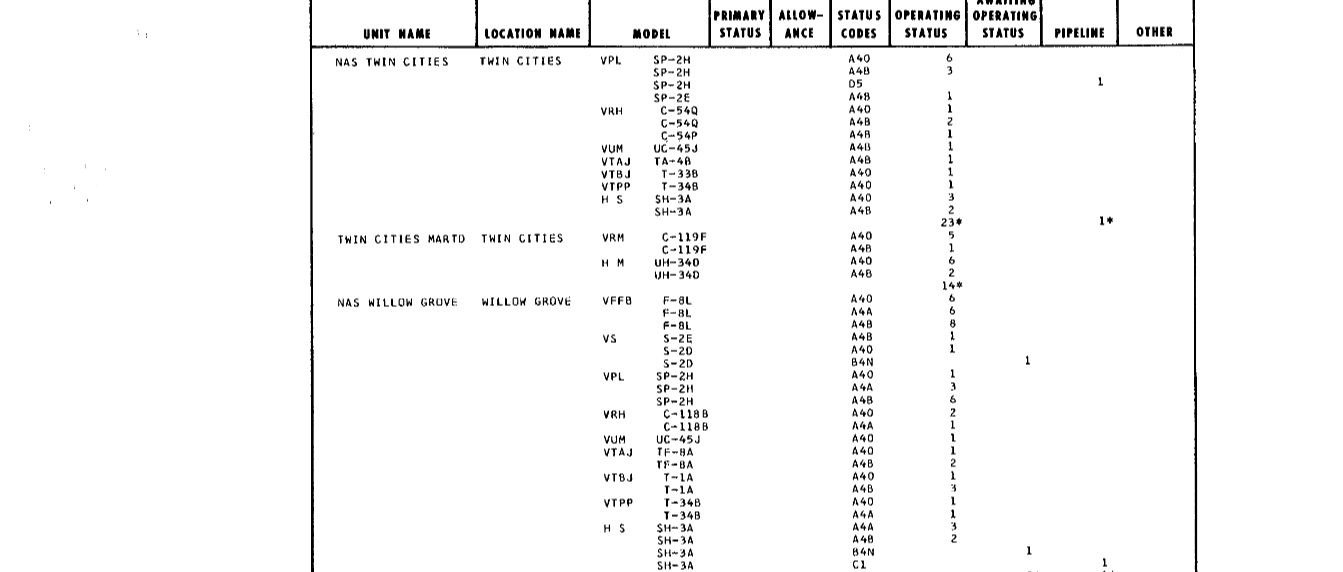
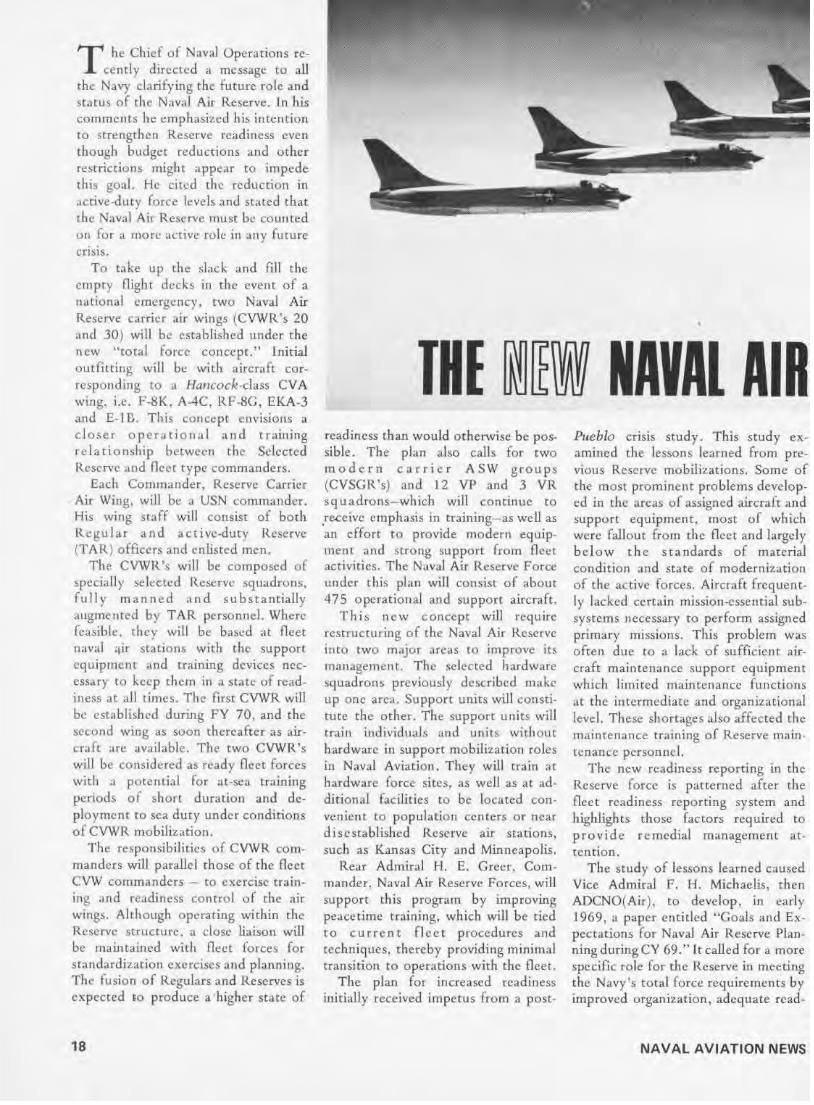
The Navy's own aircraft tables show the station going dark. In the January 1970 report NAS Twin Cities still held 23 aircraft — SP-2H and SP-2E Neptunes for the patrol reservists, C-54Q and C-54P transports, a UC-45J, a TA-4B Skyhawk, T-33B and T-34B trainers and five SH-3A helicopters — with the Marine detachment's six C-119F Flying Boxcars and eight UH-34D helicopters beside them[35]. By the March 1970 report a single C-54Q was left and the Marine line had gone[36]; the April 1970 report, and May's and June's, have no Twin Cities entry at all[38]. The station's aircraft were gone before the 1 April reorganisation took effect. Naval Aviation News said as much the same month: explaining the Chief of Naval Operations' message on the Reserve's future — two Reserve carrier air wings, a force of "about 475 operational and support aircraft" — it placed the new support units, which would train "without hardware", at "additional facilities to be located convenient to population centers or near disestablished Reserve air stations, such as Kansas City and Minneapolis"[37]. That is the closest thing to an announcement found: by March 1970 the Navy's own magazine counted Minneapolis, with Olathe, among the stations already disestablished, and the detachment that stayed behind was one of those hardware-less support units.
No closure order naming Twin Cities was found, but the national picture is clear. In October 1969 the Defense Department began realigning 307 installations[45]; the sister reserve station at Olathe, Kansas, was told its closure, "effective June 30, 1970", "resulted from a $3-billion defense spending reduction announced by President Nixon and Defense Secretary Melvin Laird"[46], and NAS New York's phase-out was announced on 5 March 1970[47]. On 1 April 1970 the Naval Air Reserve itself was reorganised: every carrier-type squadron went into two Reserve Carrier Air Wings under a new Commander Naval Air Reserve Force, "a continuation of a program initiated in July 1968 to give Naval Air Reserve squadrons an improved combat readiness", and squadrons were cut loose from the station training units that had owned their aircraft[48, 49]. Twin Cities' patrol reservists were merged into VP-60, established at Glenview on 1 November 1970 from units "at Naval Air Station Glenview and NAS Twin Cities"[50]; the Marines' VMR-234 followed to Glenview[8]. The Air Force Reserve's 934th, activated at the airport on 11 February 1963, "moved to its present location on the north side of the airport" in June 1970 — its own history says the Navy "closed NAS Twin Cities and the AFR moved into the vacated space"[54, 51]. On 17 May 1971 American Indian Movement activists "scaled a fence to begin their occupation of the Twin Cities Naval Air Station", pressing for Indian education (the Star Tribune's timeline files the takeover under 1970; the dated newspaper photograph says 1971)[52, 55]. Today the north side is the Minneapolis–St Paul Joint Air Reserve Station, home to the 934th Airlift Wing and the Minnesota Air National Guard's 133rd.


About this archive
Six pages, one aircraft
Specifications, Performance & Deployments
Dimensions and weights by variant, the J42/J33/J48 engines with dry and water-injected thrust, guns and stores, what early jet carrier landings were really like, and a sourced table of every carrier and squadron the Panther is documented aboard.
Combat History & Pilot Awards
3 July 1950 and the Navy's first jet kills; Amen's MiG-15 on 9 November 1950; Royce Williams's seven-MiG fight and his 2026 Medal of Honor; Navy Crosses, Silver Stars and DFCs by name; Armstrong, Glenn and Ted Williams.
Photo Gallery
135 photographs in six sets — carrier operations, reservists, combat, maintenance and arming, Blue Angels and prototypes, museums — public-domain Navy and Marine Corps photography, Creative Commons museum photographs, four Hennepin County Library newspaper photographs of the Minneapolis station and two original prints from a private collection, among them the NAVY MINNEAPOLIS Panther with its pilots, each captioned with squadron, place and date.
Surviving Panthers & Museum Exhibits
Every known survivor by Bureau Number, with its own service history, markings, restoration status and a photograph in the museum — plus the nearest Panthers to Minnesota.
Variants & Evolution
XF9F-1 to F9F-5P and the drones, the production arithmetic, and how the straight wing was swept 35° into the F9F-6 Cougar.
Videos
Sixty-odd curated YouTube links — documentaries, 1949–56 archive film, Royce Williams in his own words and his 2026 Medal of Honor, Glenn, Armstrong and Ted Williams, The Bridges at Toko-Ri and the museum survivors. No gaming or flight-sim videos.
How to read the citations
Bracketed numbers point to the numbered sources at the foot of each page. Where sources conflict, the page prints both figures. Where nothing was found, it says "not found" — a documented gap is worth more than a confident guess.